
Goodeid History, Conservation & Breeding Guide
DSS Aquatics Livebearer Knowledge Center
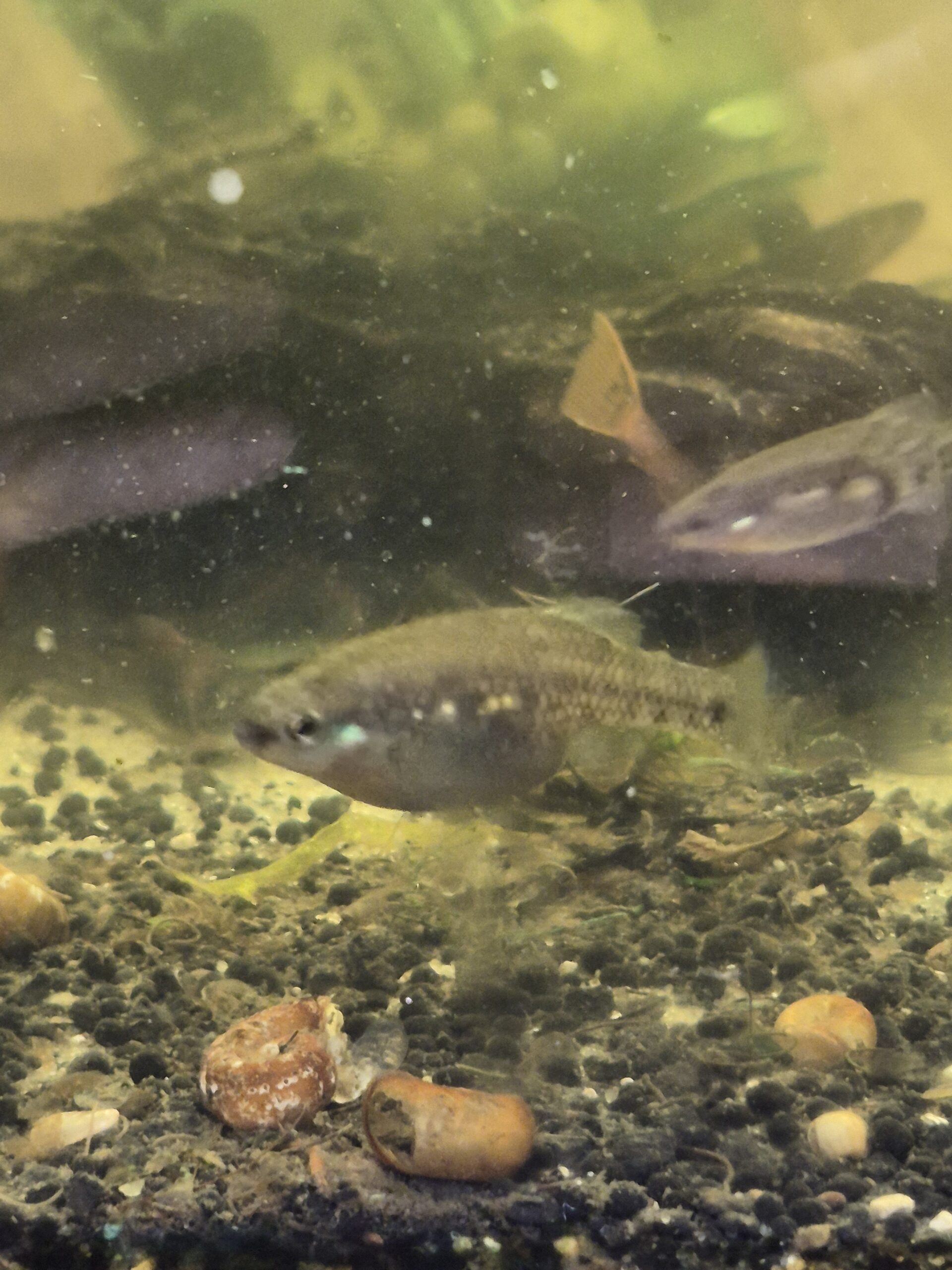
Zoogoneticus tequila from the documented Greg Sage / Select Aquatics line maintained at DSS Aquatics.
A Different Kind of Livebearer
Mexican goodeids of the subfamily Goodeinae are biologically distinct from guppies and swordtails. Their embryos develop specialized trophotaeniae—ribbon-like structures involved in maternal nutrient transfer—making their reproductive biology fundamentally different from typical poeciliids.
Evolution in the Mexican Highlands
Goodeines are concentrated in central Mexican highland waters, where isolation among basins contributed to a remarkable radiation of species. Many have small natural ranges, making habitat alteration, water extraction, pollution and introduced species especially consequential.
Conservation
Goodeids include some of the aquarium hobby’s most conservation-relevant livebearers. Captive populations can be valuable, but only when species identity, provenance and population management are taken seriously. DSS will not equate ordinary aquarium propagation with participation in a formal conservation program unless the program’s requirements are actually met.
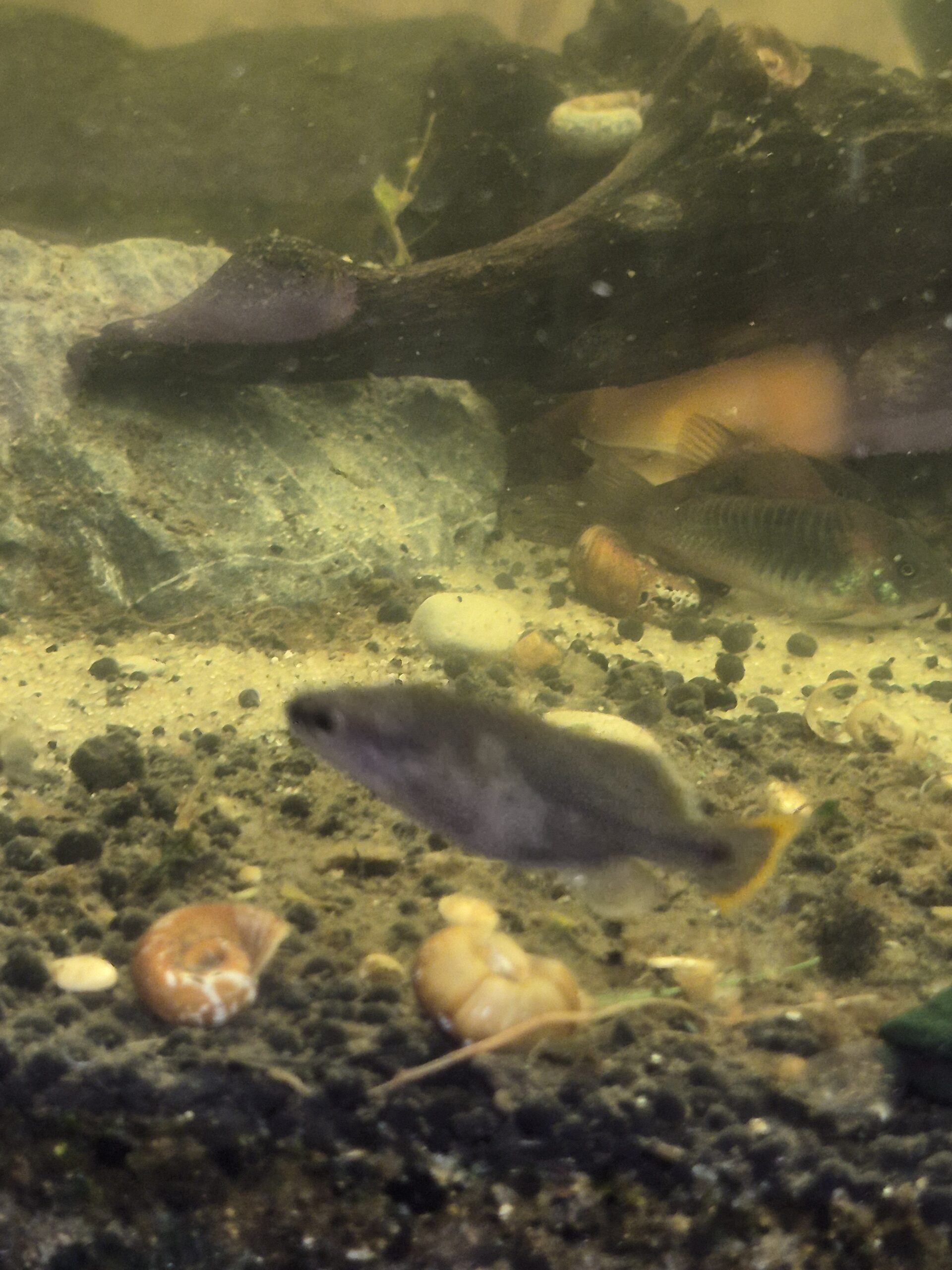
Original DSS Aquatics photograph.
Tequila Goodeid
Zoogoneticus tequila is a flagship example of how ex-situ populations can matter. DSS maintains a Greg Sage line and has documented successful reproduction. Its dedicated species dossier should track source, generations and fry survival.
DSS Goodeid Collection
DSS Aquatics currently maintains multiple goodeid projects in the fish studio. These are treated as species-level breeding and documentation projects, with provenance preserved wherever it is known.
Tequila Goodeid
DSS maintains a Greg Sage line of Tequila Goodeid (Zoogoneticus tequila) and has documented successful reproduction. The line will be tracked by source, generation, brood and fry survival.
Trout Goodeid
DSS has secured Trout Goodeids from breeder Greg Sage. This source relationship will be retained in the provenance record, and the fish will receive a dedicated species dossier with verified taxonomy, conservation information, breeding records and original DSS photography.
San Marcos Red Tail Goodeid
DSS also maintains San Marcos Red Tail Goodeids in the fish studio. Before a scientific name, locality interpretation or conservation status is published for this stock, DSS will verify the exact identity and source designation so the trade/common name is not converted into an unsupported taxonomic claim.
Reserved for actual DSS photographs of Tequila, Trout and San Marcos Red Tail Goodeids: adult male/female, breeding groups, fry and juveniles. No AI renderings.
Breeding Biology
Compared with small poeciliids, many goodeids produce fewer, larger young. Husbandry and breeding records should track female condition, interbrood intervals, brood size, juvenile growth and social behavior rather than applying guppy breeding assumptions.
DSS Conservation Standard
Each goodeid line should carry source/provenance, acquisition date, parent group, generation, brood dates, fry counts and transfer records. Unplanned hybridization between goodeid species is unacceptable in conservation-minded stock.
Goodeid Conservation Library
DSS will create species dossiers that pair current conservation assessments with captive-history records. Priority taxa will include DSS-maintained species and historically important goodeids whose wild status makes accurate captive records especially valuable.
Reproductive Biology: Trophotaeniae
Developing goodeid embryos form trophotaeniae, specialized ribbon-like structures associated with maternal nutrient transfer. This matrotrophic system is a major reason goodeids should never be described simply as “guppies that have bigger fry.”
Provenance Before Color
For conservation-minded goodeids, DSS will prioritize species, locality/source, breeder chain and generation over creation of ornamental strain names.
FAQ
Does breeding a threatened goodeid automatically make a collection a conservation program?
No. Formal conservation work requires appropriate identity, provenance, population management and often coordination with recognized programs.
Why track transfers?
A transfer record helps future keepers reconstruct the captive lineage and reduces loss of provenance over generations.
DSS Image & Evidence Standard
Images on this resource must depict the actual species, strain, locality or historical subject claimed. DSS-owned photography is preferred. External images may be used only when the copyright owner or license permits our intended website use and attribution is recorded. We do not use AI-generated fish imagery as factual species documentation.
Research Standard
Taxonomy, natural range and conservation claims are checked against authoritative databases and scientific literature. Historical claims are sourced separately from aquarium folklore. Domestic strain names are not treated as species names, and DSS breeding observations are identified as original DSS records rather than universal facts.